
Welcome
A Strategic Approach to
Art and Creativity



Art Curator & Art Advisor
Milano/ Pietrasanta/ Dubai
My name is Alessio Paolo Musella, and for over twenty years I have worked in the fields of art, design, and strategic consulting. My career began in the 1990s in the Middle East, where I spent nearly a decade working as an interior designer across Saudi Arabia, the United States, and Europe. During that period, I began integrating art into my projects, developing a deep sensitivity toward the dialogue between space, aesthetics, and culture. Today, I focus on art consulting, curatorship, analysis of international markets, and strategic communication for clients who aim to position themselves within complex global contexts. I collaborate with companies, galleries, professionals, and institutions that require expert guidance in understanding cultural, creative, and territorial dynamics. I also direct Exit Urban Magazine and the blog Art & Investments, where I explore themes related to contemporary art, photography, music, and the evolution of the market. Writing and research are essential tools for me: they allow me to observe trends, anticipate industry shifts, and translate them into concrete strategies for my clients. My work is distinguished by a cross-disciplinary vision: blending art, culture, and business to make every project not only aesthetically relevant but also strategically solid. When I support a client, my goal is to deliver real value through analysis, vision, and an international approach developed over years of hands-on experience. If we are about to begin a journey together, know that my commitment is to offer you consultancy that combines elegance, expertise, and concreteness.
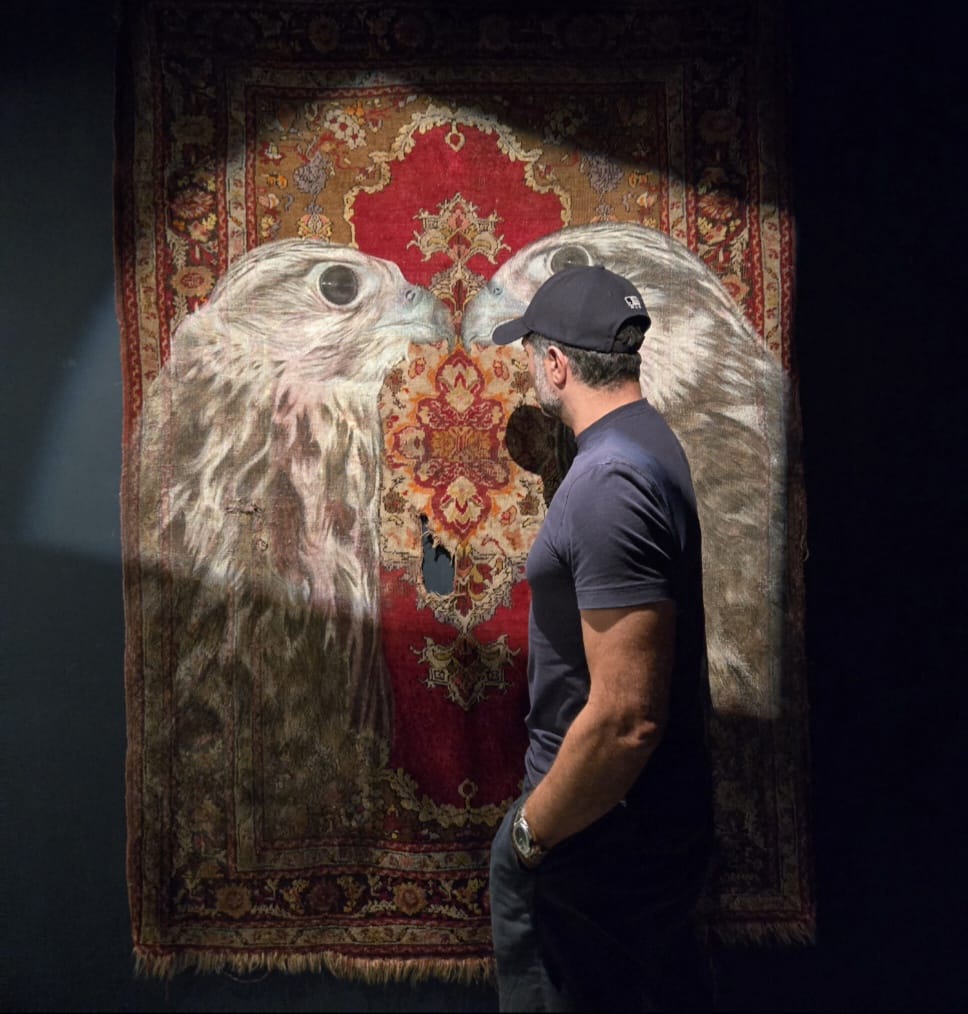
I deliberately draw an almost invisible parallel between falconry and artistic curation: in both cases, the secret lies not in control, but in building a bond based on trust and respect for the other’s time.
Curating an artist is not a directive act, but an exercise in empathy and symbiosis.
Before even looking at the work, the curator must be able to “listen” to the artist’s silence, their doubts, and their creative urges.
A vision is not imposed, but rather an idea is sown, allowing the artist to make it germinate according to their own sensibility.
The curator is the artist’s mirror. They observe what the artist, too immersed in the process, sometimes misses, and reflect it through dialogue.
This is how the final project is not solely the artist’s or the curator’s, but the fruit of a shared evolution.
In the noble traditions of the Emirates, the falconer does exactly this: he doesn’t “train” in the mechanical sense of the word, but observes the bird’s temperament and suggests directions through small gestures.
If the falconer doesn’t “listen” to the bird, the falcon will never return to him.
Paul Klee
Helping the artist make his inner world visible by walking alongside him: THIS IS MY IDEA OF A CURATOR, AND IT’S WHAT I LOVE TO DO